
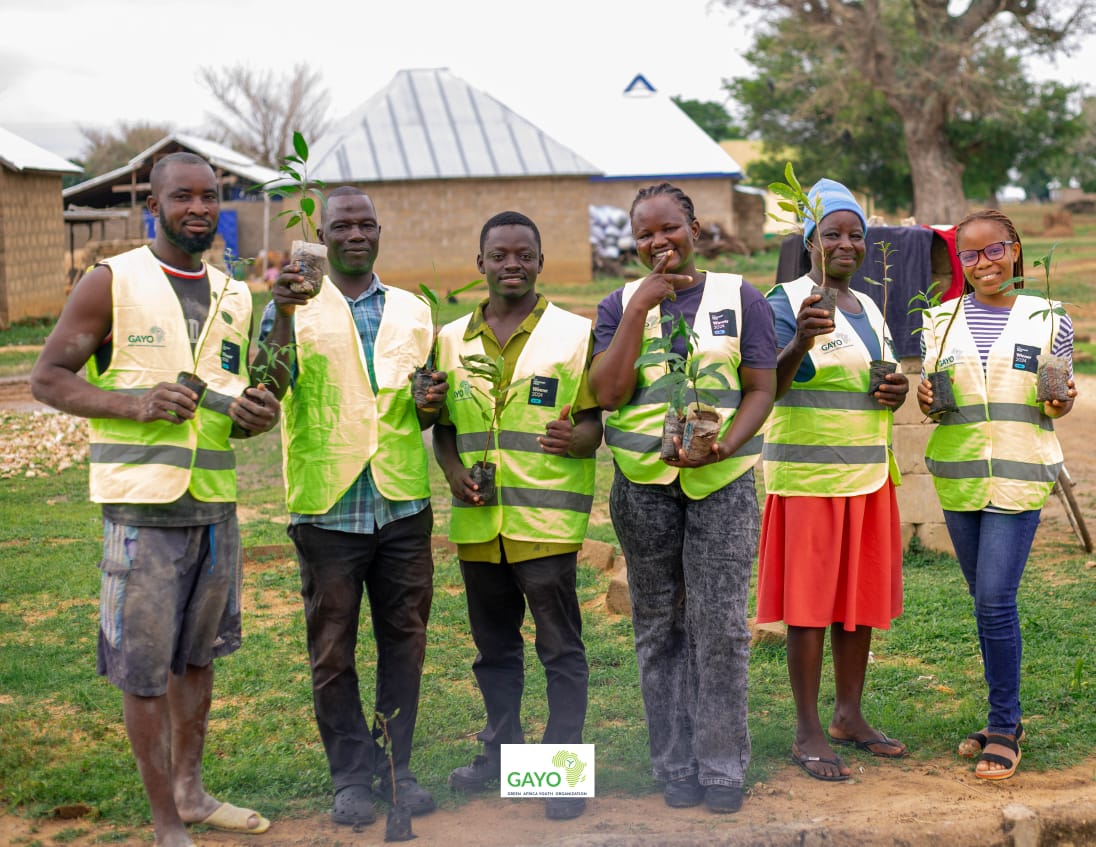
The fight against desertification in the Upper East Region is gaining fresh momentum as schools, traditional leaders and community members join hands to restore degraded landscapes through a 1,000-tree planting campaign spearheaded by the Green Africa Youth Organisation (GAYO).
Under its “Let’s Go Tree Planting Campaign”, implemented through the Water for Adaptation Project, GAYO is planting tree seedlings across the Kassena-Nankana West and Bongo districts to strengthen climate resilience while cultivating environmental stewardship among young people.
Within just three days of the campaign, 380 tree seedlings had already been planted in Kandiga, Mirigu and Sirigu, as well as six Junior High Schools, with 30 teachers, traditional authorities and women leaders committing themselves to nurturing the seedlings to maturity.
The campaign, which began from June 30 to July 2, 2026, received 400 tree seedlings from the Navrongo Forestry Commission Division, reinforcing the partnership between the Forestry Commission and GAYO in promoting environmental restoration.
The seedlings, including mahogany, teak, mango, cashew, cassia and umbrella trees, were selected for their ecological, economic and climate adaptation benefits.
At Atasige Junior High School in Mirigu, students and teachers planted 40 seedlings while teachers also received additional seedlings to establish trees in their homes.
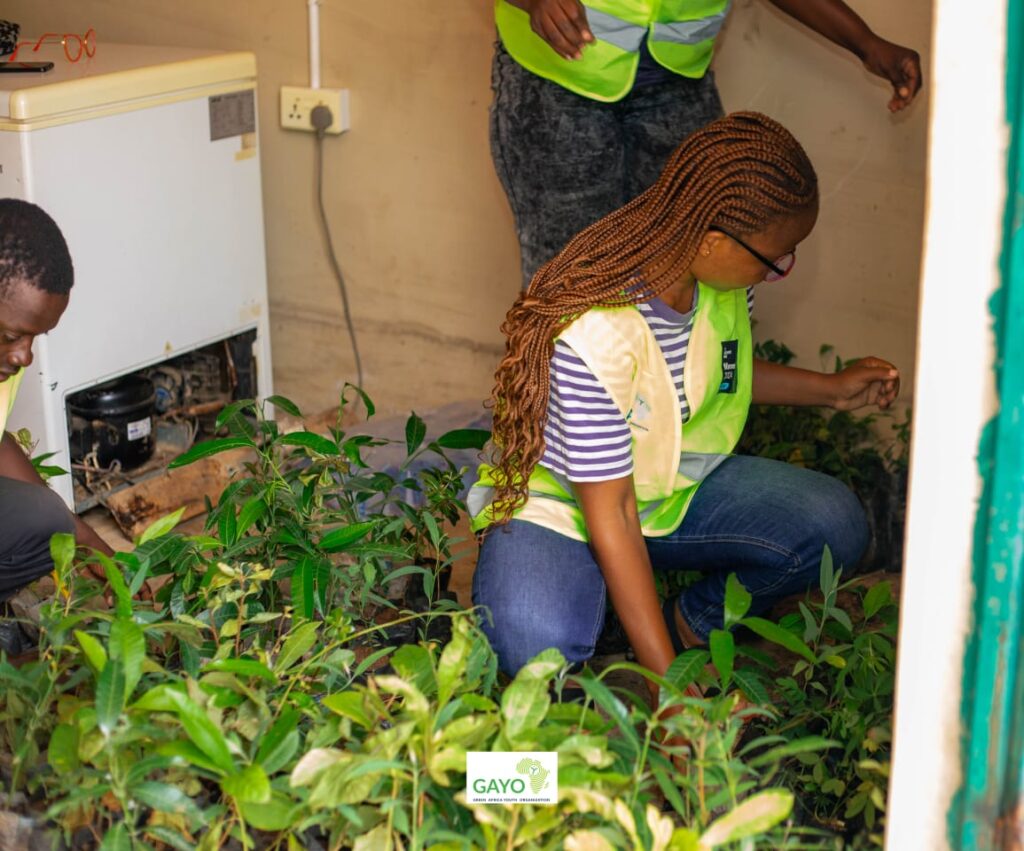
Headmistress Madam Cecilia described the initiative as timely, pledging that the school would ensure the trees survive.
“We appreciate GAYO for this intervention and assure them that these trees will be properly cared for. We are also excited to participate in the upcoming Climate Resilience and Menstrual Hygiene Quiz Competition,” she said.
For GAYO Climate and Menstrual Hygiene Volunteer Madam Irene, involving schoolchildren is essential to securing the future of climate action.
“Climate action begins with children. These trees will provide shade, improve air quality and create healthier learning environments while helping students appreciate the importance of protecting nature,” she said.
The campaign later moved to Sirigu, where students of St Joseph’s JHS, St Peter’s JHS and Mother of Mercy JHS participated in tree planting and climate education sessions. The schools also received protective fencing materials to shield the young trees from roaming animals and were enrolled in GAYO’s Best Tree Care Award, an initiative designed to encourage long-term maintenance rather than one-day planting exercises.
Beyond the schools, the campaign reached the Gunworkor Traditional Area, where women leaders pledged to nurture 200 tree seedlings allocated to the community.
Leading the commitment was Poanaba Freda Nyaaba I, Queen Mother of Gunworkor, who urged communities to take ownership of environmental conservation.
Drawing from her experience as a GAYO Community Climate Leader and participant at COP29 in Baku, Azerbaijan, she said protecting the environment begins with local action.
“As women, we have a responsibility to protect the environment. We will work together to ensure these trees survive for future generations,” she said.
Project Lead Khadijah Azumah Braimah said the overwhelming response from communities demonstrated that grassroots participation remains key to tackling climate change in northern Ghana.
“The enthusiasm shown by students, teachers, traditional authorities and women groups proves that communities are ready to lead climate action. Together, we can restore degraded lands, combat desertification and build a greener, more climate-resilient Upper East Region,” she said.
The initiative contributes to Ghana’s climate commitments by promoting afforestation, restoring degraded landscapes and increasing carbon sequestration, while advancing several Sustainable Development Goals.
However, GAYO says sustaining the campaign will require greater support to overcome challenges such as inadequate water for irrigation, destruction of seedlings by free-ranging livestock and limited funding.
The organisation is therefore appealing to the government, development partners, corporate institutions and individuals to invest in community-led climate initiatives, insisting that restoring the region’s fragile environment will require collective action beyond annual tree-planting exercises.
Source: bolgafmonline.com|102.7 MHz| Mary Aperika Atiamah| Bongo
