
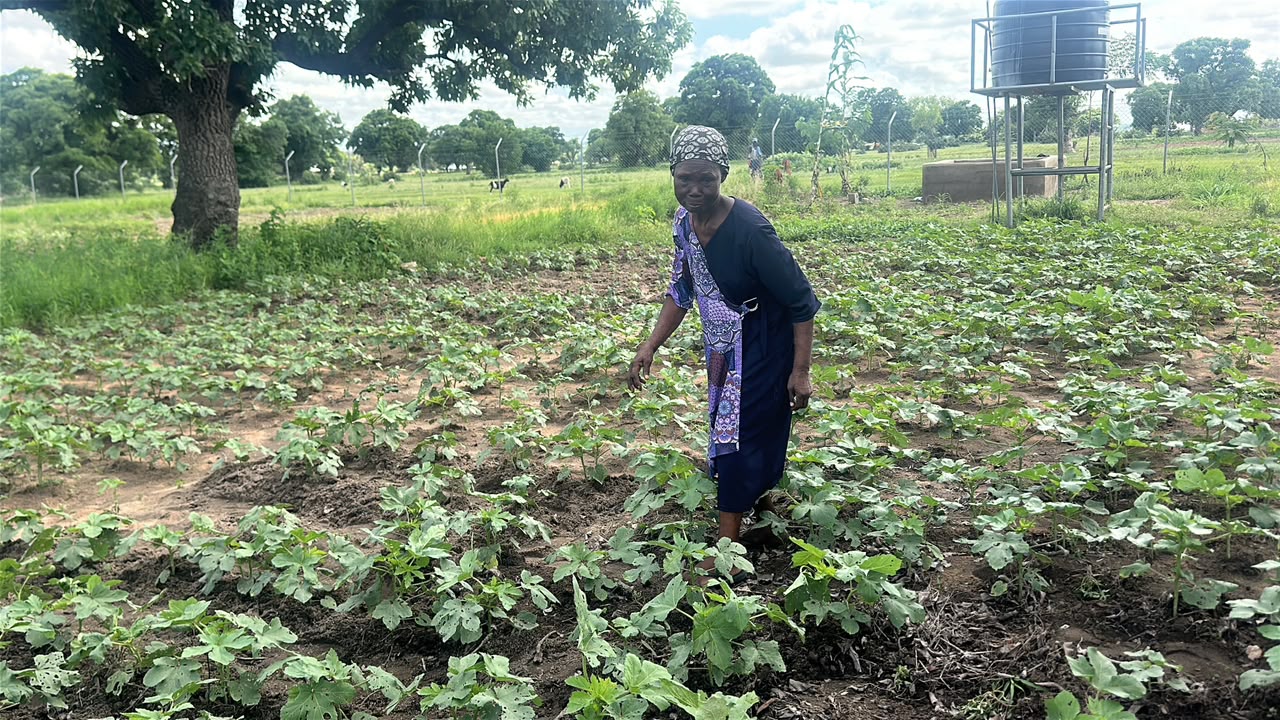
For Madam Celestina Aduko, farming in Awaradonne, a farming community in the Talensi District of the Upper East Region, has for years been a struggle against rising input costs, especially the increasing price of chemical fertilisers.
At her late 60s, the retired educationist has returned to the land as a full-time farmer and leader of a women farmers’ group. But each farming season comes with uncertainty as she and other smallholder farmers battle to secure the inputs needed to improve productivity.
“A bag of fertiliser is selling around GH₵500. How will we get money to buy? We often don’t farm to expectation, or we abandon our farmlands entirely,” she said.
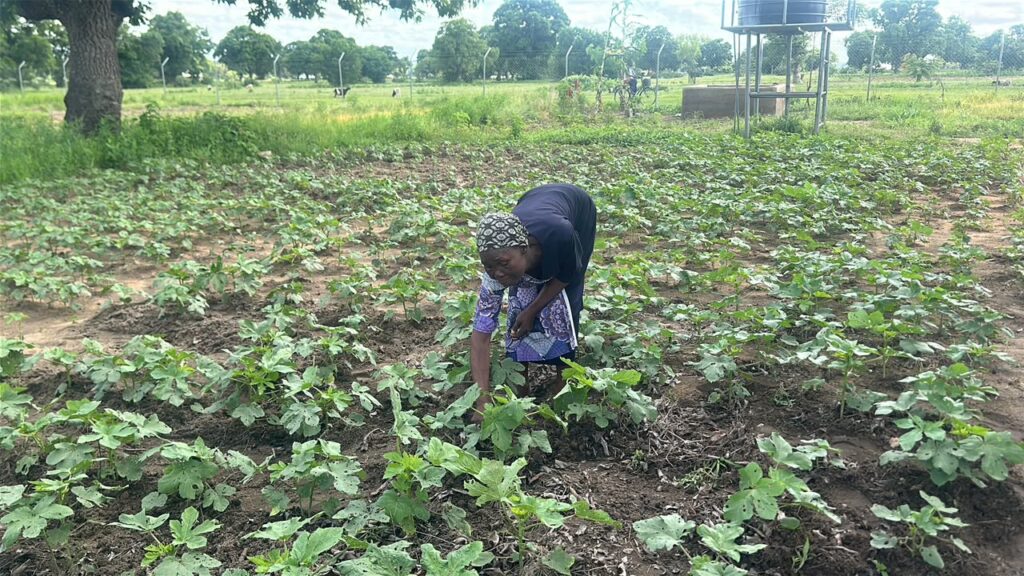
For Madam Aduko and many women farmers across northern Ghana, the high cost of agricultural inputs has become one of the biggest threats to sustainable farming and household food security.
Limited financial resources, smaller farm sizes, and difficulties accessing agricultural support programmes have left many women farmers vulnerable, forcing some to reduce the size of their farms or depend on low-input farming methods that produce poor yields.
But a new climate-smart agriculture initiative is offering a different path, one that turns what many farmers consider waste into a valuable resource for improving soil fertility.
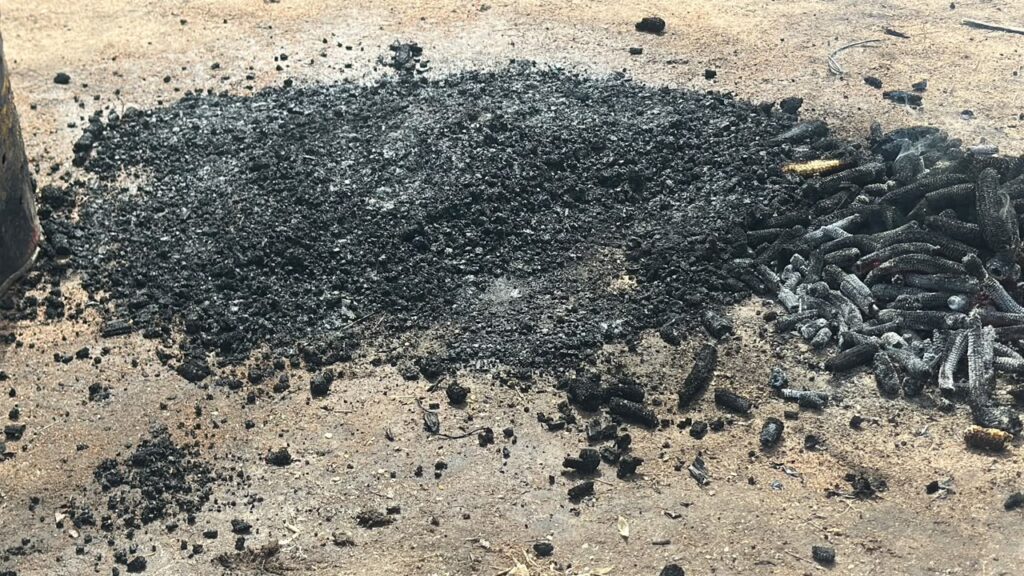
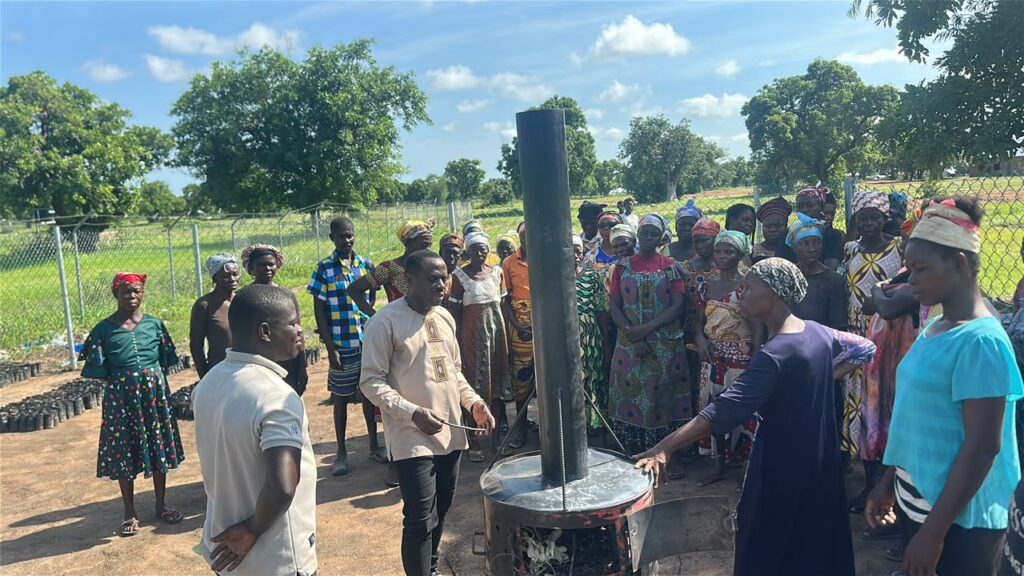
Through the International Union for Conservation of Nature (IUCN)’s LOGMe II Sahelian Landscapes Project, farmers in 14 communities across the Upper East and Upper West Regions are being trained to produce and apply biochar, a sustainable soil enhancer made from locally available agricultural residues.
For Madam Aduko, the training has changed the way she looks at farm waste.
“We didn’t know that our farm waste is something that can be used successfully. From now on, instead of spending plenty of money on fertiliser from the market, we’ll produce our own. The little we can buy, we’ll mix in and make the soil better,” she said.
Biochar is produced through a process known as pyrolysis, where materials such as corn cobs, rice husks, guinea corn stalks, soybean stalks, groundnut shells, and animal waste are heated in a low-oxygen environment to produce a carbon-rich material.
A soil research scientist and technical facilitator for the project, Richard Kwame Denteh, explained that biochar has the potential to restore degraded soils while reducing farmers’ dependence on expensive chemical fertilisers.
“When added to the soil, it activates nutrients in the soil. It replaces or augments the need for fertiliser. With time, farmers may eliminate fertiliser entirely because biochar makes the soil rich and fertile on its own,” he explained.
According to him, the technology offers multiple benefits, including improving soil structure, retaining moisture during dry periods, supporting beneficial microorganisms, and contributing to climate change mitigation through carbon storage.
He also raised concerns about excessive dependence on chemical fertilisers, arguing that it could affect soil health and the quality of food produced over time.
“When we say food security, we look at quality and quantity. Too much fertiliser is reducing the quality of food we bring from the farms,” he noted.
Beyond promoting biochar production, the LOGMe II Sahelian Landscapes Project is also supporting environmental restoration efforts through the establishment of community tree nurseries in beneficiary communities.
Derick Sedenkor, the project officer overseeing implementation, said the initiative combines sustainable farming practices with landscape restoration to help communities adapt to the growing effects of climate change.
In the Talensi District, Agriculture Extension Officer Ayaabanga Simon said farmers, particularly women, have shown strong interest in adopting the technology, with some participants exploring opportunities to produce and sell biochar as an additional income stream.
As fertiliser prices continue to put pressure on smallholder farmers, Madam Aduko believes the ability to produce a cheaper and locally available soil enhancer could transform the future of farming in her community.
For her and many other women farmers, the biochar initiative represents more than an alternative to chemical fertiliser, it represents a shift towards self-reliance, improved soil health, and a more sustainable future for agriculture in northern Ghana.
Source: bolgafmonlin.com |102.7 MHz | Moses Apiah | Talensi
