
Table of Contents
Ibrahim Mumuni says role conflicts between education directors, MMDAs and other stakeholders are weakening district-level administration
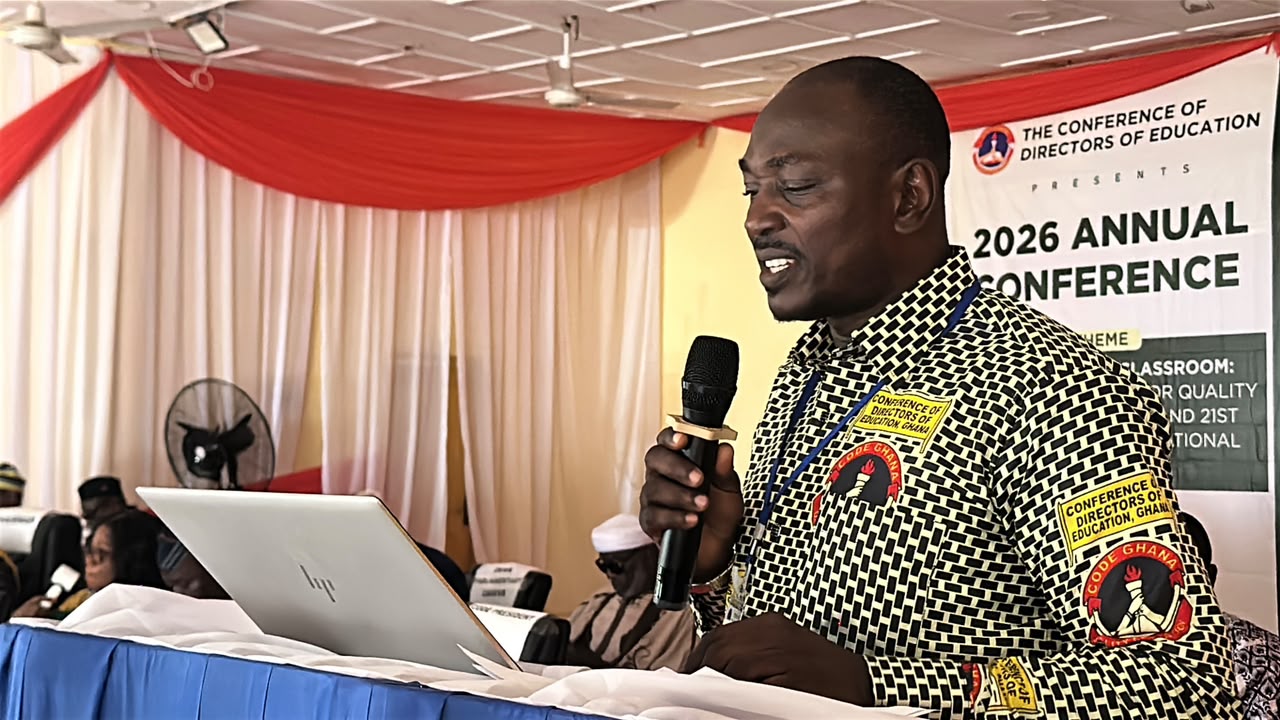
The President of the Conference of Directors of Education (CODE), Ibrahim Mumuni, has called for the restoration of directors’ Category Four allowances, warning that persistent resource constraints and role conflicts between education directorates and local government authorities are undermining efforts to improve teaching and learning in Ghana.
He said the allowances, which he described as having been capped since their introduction, had lost their motivational value, and appealed to the Ministry of Education and the Ghana Education Service (GES) to address the concerns of directors responsible for implementing national education policies at the district level.
Mr. Mumuni made the appeal in a statement at the 33rd Annual Conference of CODE in Bolgatanga in the Upper East Region, held under the theme, “From Policy to Classroom: District Leadership for Quality Learning Outcomes and 21st Century Skills for National Development.”
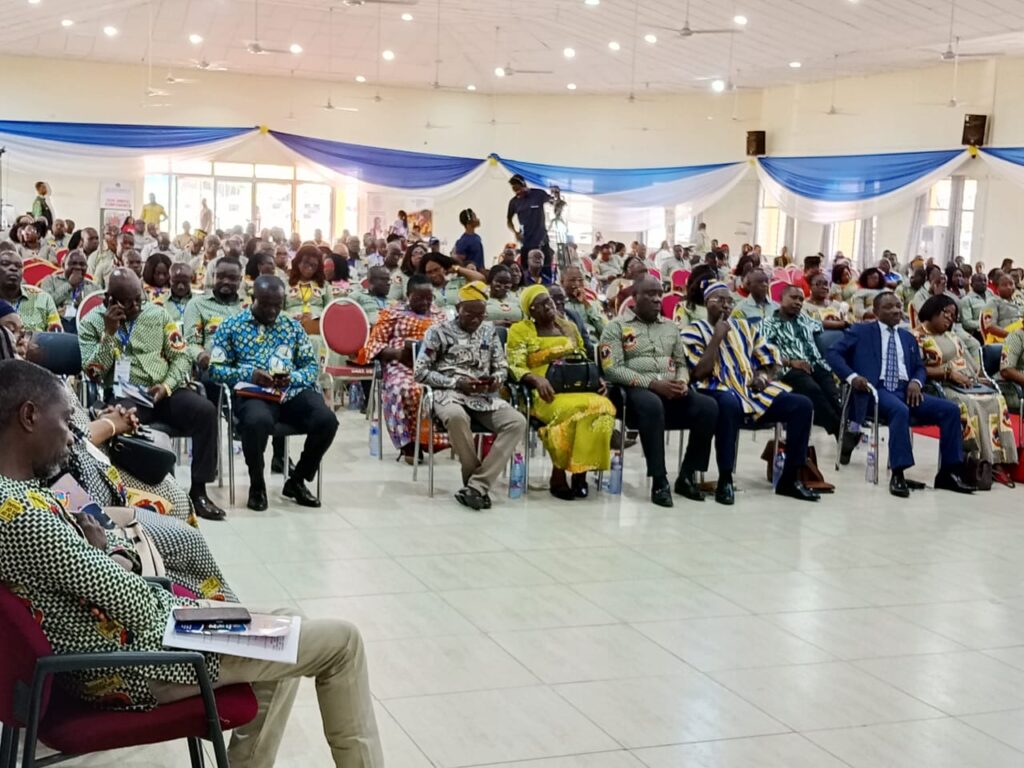
The conference brought together education directors to deliberate on challenges affecting the delivery of pre-tertiary education, with the CODE President arguing that policies developed at the national level could only produce results if district directorates had the resources, authority and support needed to implement them.
In the statement, he said the association’s national executive was engaging the Director-General of the GES and the Minister of Education over the restoration of Category Four allowances, the replacement of ageing official vehicles and motorbikes, vehicle insurance and the provision of residential accommodation for directors.
He also called for better logistical support for School Improvement Support Officers (SISOs), whose work includes monitoring and supervising schools.
“Capped Allowances: Category 4 Allowance for Directors has been capped since its inception. Its motivational value is gone,” Mr. Mumuni stated.
The appeal comes as education managers face pressure to improve learning outcomes while contending with inadequate logistics, staffing gaps and shortages of teaching and learning materials.
CODE President raises concerns over MMDAs, GES role conflicts
Beyond the welfare concerns, Mr. Mumuni identified what he described as role conflicts between Metropolitan, Municipal and District Assemblies (MMDAs), the GES and the Ministry of Education, particularly at the sub-national level, as a major challenge to effective education management.
He said the lack of clear coordination among the institutions weakened district administration and called for clearer working arrangements to enable education directors to discharge their responsibilities effectively.
The concerns touch on the relationship between education directors, who oversee the implementation of education policies and the management of schools, and local government authorities, which have responsibilities for district development and other education-related matters.
Mr. Mumuni also raised concerns about disciplinary procedures involving directors, arguing that allegations of wrongdoing should be handled through fair and transparent processes.
He called for further engagement on the security of tenure of directors, saying concerns about job security could affect their ability to make difficult decisions and carry out their responsibilities.
The CODE President further said members wanted a review of the promotion process from Director II to Director I, arguing that an interview should be sufficient for promotion to the rank rather than requiring both an aptitude test and an interview.
He said the association was seeking engagement with the Minister of Education on the issues.
Ageing vehicles, teacher shortages affect supervision
The CODE President also highlighted the operational challenges facing district directorates, including ageing vehicles used by directors and old motorbikes relied on by SISOs to reach schools.
He said some directors were responsible for supervising more than 100 schools, making effective monitoring difficult without reliable transport.
Rural schools, he added, continued to experience teacher shortages, while some directorates lacked essential personnel, including drivers, security staff, procurement officers and planning officers.
He also cited inadequate textbooks for the Standards-Based Curriculum and the absence of structured capacity-building programmes for serving directors and general managers in some areas.
Mr. Mumuni called for the full and speedy implementation of the Teacher Dabrɛ Policy to help address the imbalance in teacher distribution between rural and urban schools, alongside accommodation challenges confronting newly posted and recruited teachers.
He said the concerns required urgent attention if district leadership was to play its intended role in improving classroom performance.
Directors urged to uphold accountability
Despite the concerns, Mr. Mumuni urged education directors to demonstrate ethical leadership, transparency and accountability in the management of staff and public resources.
He cautioned that demands for improved working conditions must be matched by professionalism and responsible management, urging directors to treat teachers and communities with dignity.
The 33rd CODE conference, held at the Ghana National Association of Teachers (GNAT) Hall in Bolgatanga from October 19 to 23, 2026, focused on strengthening district leadership to improve learning outcomes and equip learners with skills for national development.
The conference brought the concerns of education directors into focus: while they are expected to translate national policies into better classroom outcomes, they say their ability to do so depends partly on adequate logistics, fair working conditions and effective coordination with the institutions and stakeholders with whom they work.
Source: Bolgafmoneline.com| 102.7 MHz | Bolgatanga
