
The Forum for African Women Educationalists (FAWE) Ghana Chapter is intensifying advocacy for equal access to quality education for girls and young women, with new opportunities being opened for disadvantaged young people to pursue tertiary education.
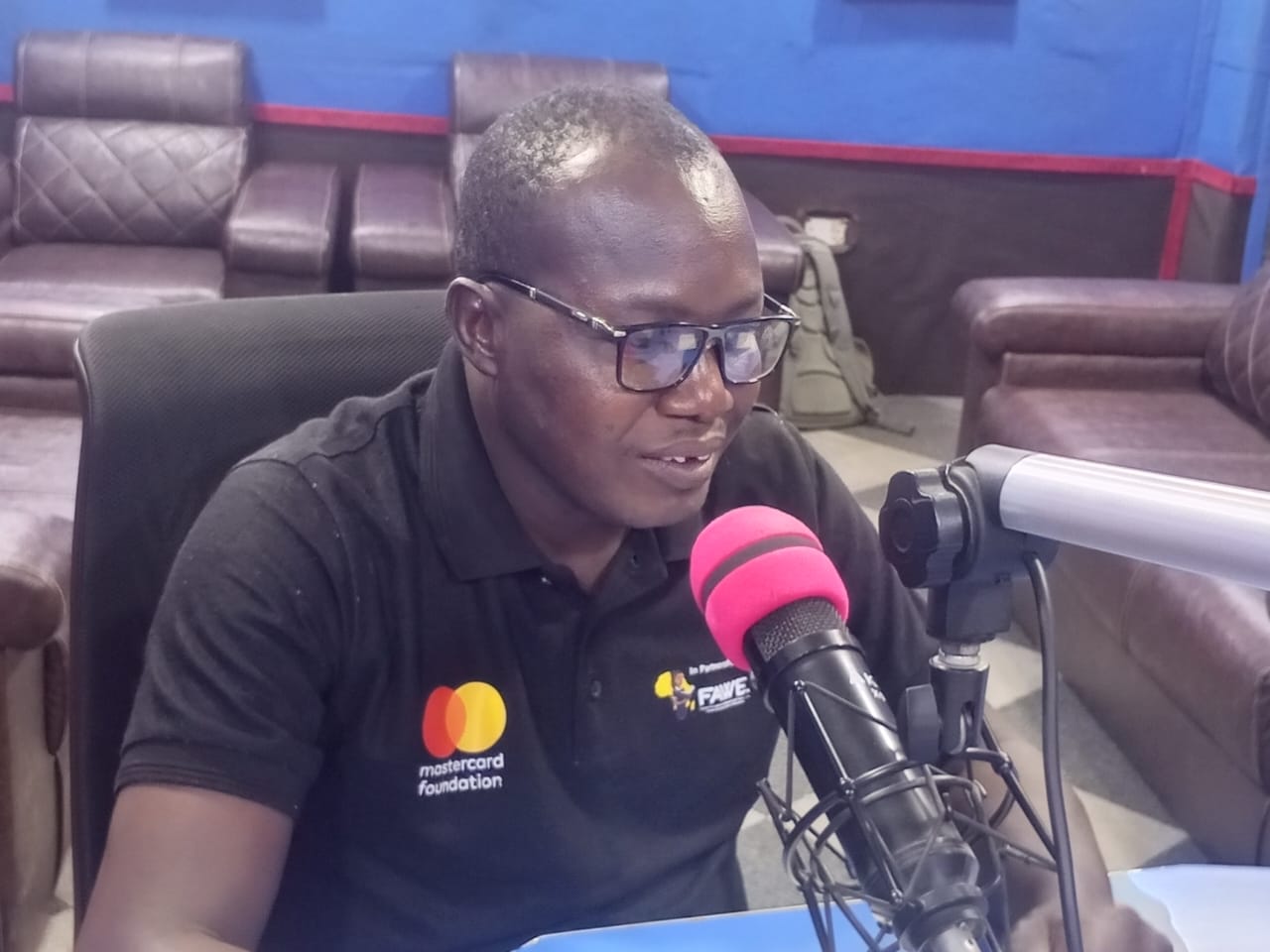
Speaking on Bolga FM, Emmanuel Gazari, Field Officer for FAWE Ghana, said the organisation was committed to ensuring that girls have the same opportunities as their male counterparts to access education, develop their talents and contribute to national development.
He said many girls and young people have the potential and determination to succeed but are held back by financial, academic and other barriers.
As part of efforts to address these challenges, FAWE Ghana, in partnership with the Mastercard Foundation, is implementing the FAWE-Mastercard Foundation Phase II Programme for the 2026/2027 academic year.
The programme is expanding access to tertiary education, particularly in Science, Technology, Engineering and Mathematics (STEM), with emphasis on young people who face financial and other barriers to higher education.
Under Phase II, the programme offers two major opportunities: the Bridging/Remedial Learning Programme and the Third Cohort Bursary Programme.
The Bridging/Remedial Learning Programme will provide 500 bursary opportunities for young people who have completed WASSCE or Certificate II and passed their elective subjects but obtained a D7 or pass in one core subject.
For TVET applicants, the equivalent D7 requirement applies.
The programme is designed to support academically capable young people who may have been unable to gain tertiary admission because of a weak grade in one core subject.
Successful applicants will receive conditional or probationary admission to selected partner universities to pursue STEM-related degree programmes.
They will also receive remedial support to improve their deficient core subject and prepare to resit the relevant Private WASSCE or Certificate II examination.
Applicants who meet the required entry conditions will subsequently have their admission regularised and continue their tertiary education.
FAWE Ghana is also offering 200 fully funded bursaries for the 2026/2027 academic year under the Third Cohort Bursary Programme.
The bursaries will support young people pursuing STEM-related programmes at FAWE Ghana’s partner Technical Universities.
The programmes lead to either a three-year Higher National Diploma (HND) or a two-year Diploma.
The opportunity targets brilliant but financially disadvantaged young people who have completed WASSCE or Certificate II and qualify for tertiary education.
Applicants for both programmes must generally be between 15 and 25 years old, have completed WASSCE or Certificate II, demonstrate financial need and be from one of the 16 regions listed in the application form.
They must also be willing to pursue STEM-related programmes at approved partner institutions and contribute to their communities through service and development.
For the Third Cohort Bursary, applicants must additionally have secured admission to one of FAWE Ghana’s listed partner institutions.
The programme places particular emphasis on groups that face greater barriers to education.
Priority will be given to females, persons with disabilities, refugees, internally displaced persons and young people from marginalised backgrounds.
Of the available opportunities under both programmes, 80 per cent are reserved for female applicants and 20 per cent for males.
Between 5 and 15 per cent of the opportunities are also allocated to persons with disabilities, refugees and internally displaced persons.
Mr Gazari said the initiative was part of FAWE Ghana’s broader effort to remove barriers that prevent young people, particularly girls, from pursuing education.
He urged parents, caregivers, teachers and community leaders to support girls’ education and help eligible young people access the opportunities.
He said investing in girls’ education would not only transform individual lives but also strengthen families, communities and the country’s development.
The organisation is therefore encouraging eligible young people and their families to take advantage of the opportunities and help create pathways for more girls and underserved young people to access quality tertiary STEM education.
Source: Bolgafmonline.com|102.7 MHz| Moses Anaba| Bolgatanga
