
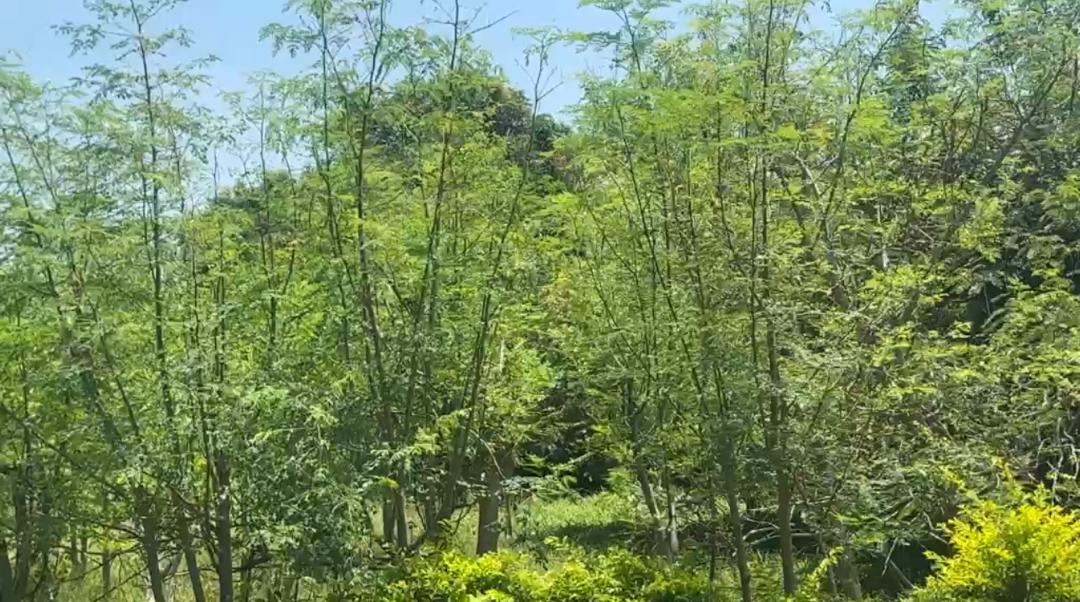
A few years ago, the space was just another unused piece of land within the campus of Regentropfen University College (RUC). Today, it has become a living classroom where agriculture, entrepreneurship, and health innovation meet.
The transformation of the once-bare land into an on-campus moringa plantation and agricultural demonstration farm represents a growing shift in how universities can contribute to solving real-world challenges beyond academic certificates.
Through the vision of the President of RUC, Rev. Fr. Dr. Moses Asaah Awinongya, SVD, and the university’s Agriculture for Social Change programme, and with funding from NuTree Muenster (of Enactus Muenster e.V.) in collaboration with Regentropfen Education Foundation, the campus farm has become a practical learning hub where students are exposed to the realities of modern agriculture, from cultivation and production to value addition and enterprise development.

For agriculture students, the plantation provides an opportunity to experience farming beyond textbooks.
Instead of learning only through lectures, students engage with the practical side of agriculture by observing crop production processes, understanding farm management practices, and appreciating how agricultural products can be transformed into marketable enterprises.
The initiative has now moved beyond cultivation into value addition with the production of Regentropfen Moringa Powder (FDA/DK26-110), packaged in 100-gram containers.
The product represents a wider ambition: demonstrating that agriculture can become a source of innovation, employment opportunities, and sustainable business models.
Moringa (Moringa oleifera), popularly known as the “miracle tree,” is recognised for its nutritional value and ability to survive in challenging tropical environments.
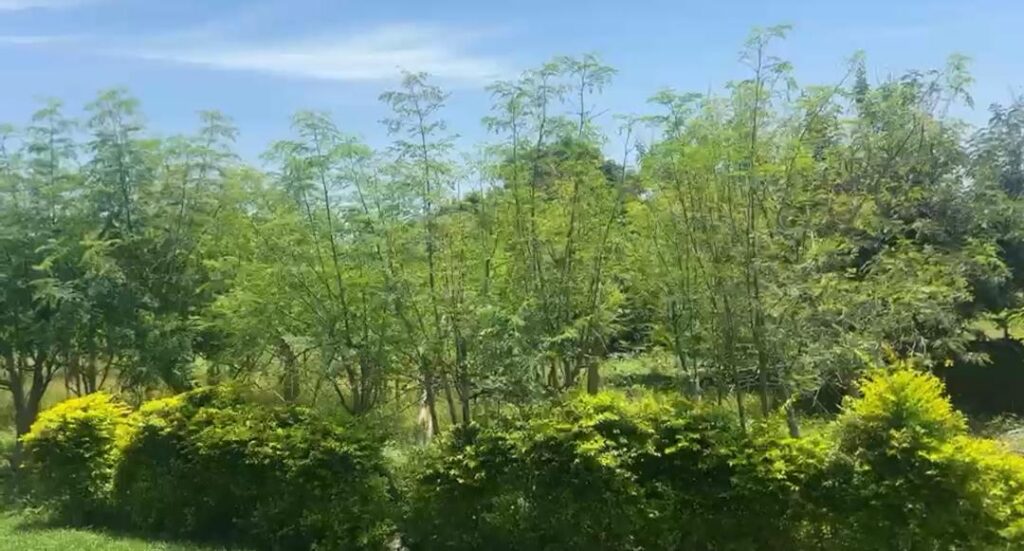
The leaves contain essential nutrients, including vitamins A, C and E, calcium, iron, potassium, and plant-based protein. The crop has become increasingly important in tropical communities because of its potential contribution to dietary diversity and food security.
Beyond nutrition, moringa offers environmental advantages. Its drought tolerance, rapid growth, and ability to support soil improvement make it suitable for regions facing climate and land degradation challenges.
However, the story at RUC is not only about the health benefits of moringa. It is about changing the perception of agriculture among young people.
When agriculture is often viewed as traditional farming alone, the university’s approach presents it as a complete value chain involving production, processing, branding, marketing, and entrepreneurship.
The plantation serves as a reminder that agriculture can be both an academic discipline and a business opportunity.
For students, the experience represents a different model of agricultural education, where knowledge is tested in the field and ideas are converted into practical solutions.
The RUC Moringa Project also raises an important question about the future role of universities in Ghana: should campuses only produce graduates, or should they also create environments where students learn to develop solutions for society?
At Regentropfen University College, a once-empty piece of land is offering one possible answer.
It has become a farm, a classroom and an enterprise, demonstrating that when education meets innovation, even neglected spaces can grow into opportunities.
Source: Bolgafmonline.com |102.7 MHz | Moses Apiah| Bongo
