
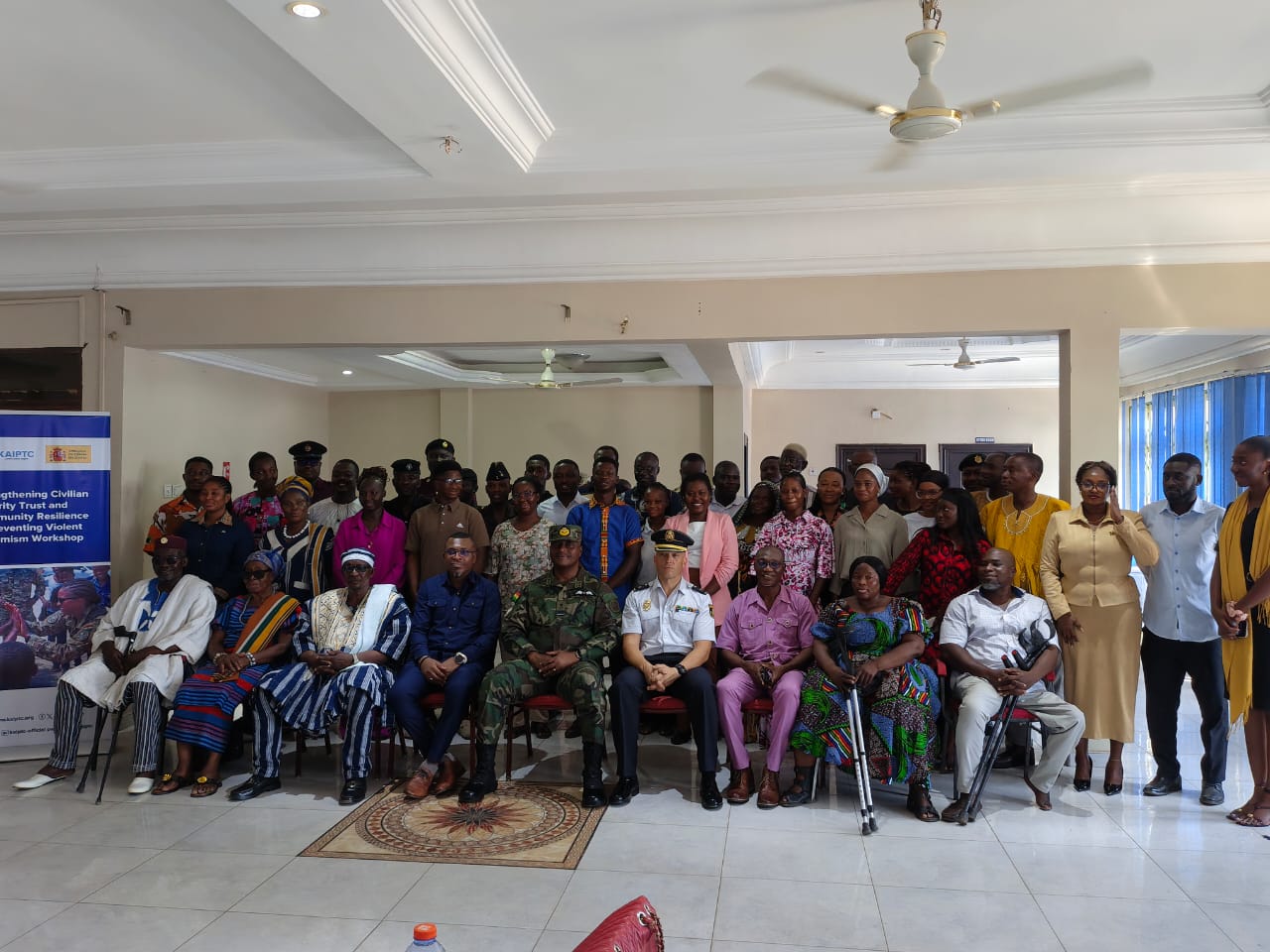
Stakeholders in the Upper East Region have been urged to strengthen collaboration between communities and security agencies as part of efforts to prevent violent extremism and address emerging security threats.
The call comes amid growing concerns over drug and substance abuse among young people, as well as the movement and presence of foreign nationals within communities, which require responsible security monitoring and coordinated responses.
The Kofi Annan International Peacekeeping Training Centre (KAIPTC) and the National Peace Council (NPC), with support from the Embassy of Spain in Ghana, organised a stakeholder workshop in Bolgatanga to explore strategies for strengthening civilian security, trust and community resilience.
The engagement, held at TAP Hotel, brought together traditional authorities, opinion leaders, security personnel and other stakeholders to discuss practical approaches to preventing violent extremism and sustaining peace in the region.
Discussions focused on the need to improve communication between civilians and security agencies, strengthen community participation in security management and promote peaceful dialogue in addressing emerging threats.
Drug and substance abuse, particularly among young people, was identified as a growing concern, with stakeholders encouraged to support community education, parental involvement, youth empowerment and rehabilitation initiatives.
The discussions also highlighted the need for effective border management, proper documentation and cooperation between residents and security agencies in managing migration-related security concerns.
Participants were reminded that the presence of foreign nationals should not automatically be treated as a security threat, stressing the importance of addressing genuine security concerns without discrimination based on nationality.
Traditional and opinion leaders were also identified as critical partners in preventing violence, given their influence within communities and their understanding of local grievances that could escalate into conflict.
The engagement further underscored the importance of rebuilding public confidence in security institutions, noting that residents are more likely to share credible intelligence and report suspicious activities when they trust security personnel.
Security agencies, in turn, were encouraged to strengthen professionalism, accountability and respectful engagement with civilians to sustain public cooperation.
The workshop emphasised that preventing violent extremism requires more than law enforcement, urging government institutions, civil society organisations, traditional authorities, women, young people and community members to take collective responsibility for peace and security.
It also highlighted youth development and access to meaningful economic opportunities as important measures to reduce young people’s vulnerability to drug abuse, criminal networks and extremist influences.
The initiative forms part of broader efforts by KAIPTC and the National Peace Council, with support from the Embassy of Spain in Ghana, to strengthen civilian security, promote trust and build resilient communities capable of preventing violence.
Stakeholders say sustained collaboration between communities and security institutions remains essential to protecting lives, safeguarding livelihoods and creating an environment where residents can pursue their economic and social activities without fear.
Source: Bolgafmonline.com| 102.7 MHz| Mary Aperika| Bolgatanga
